How to meet your advisor?

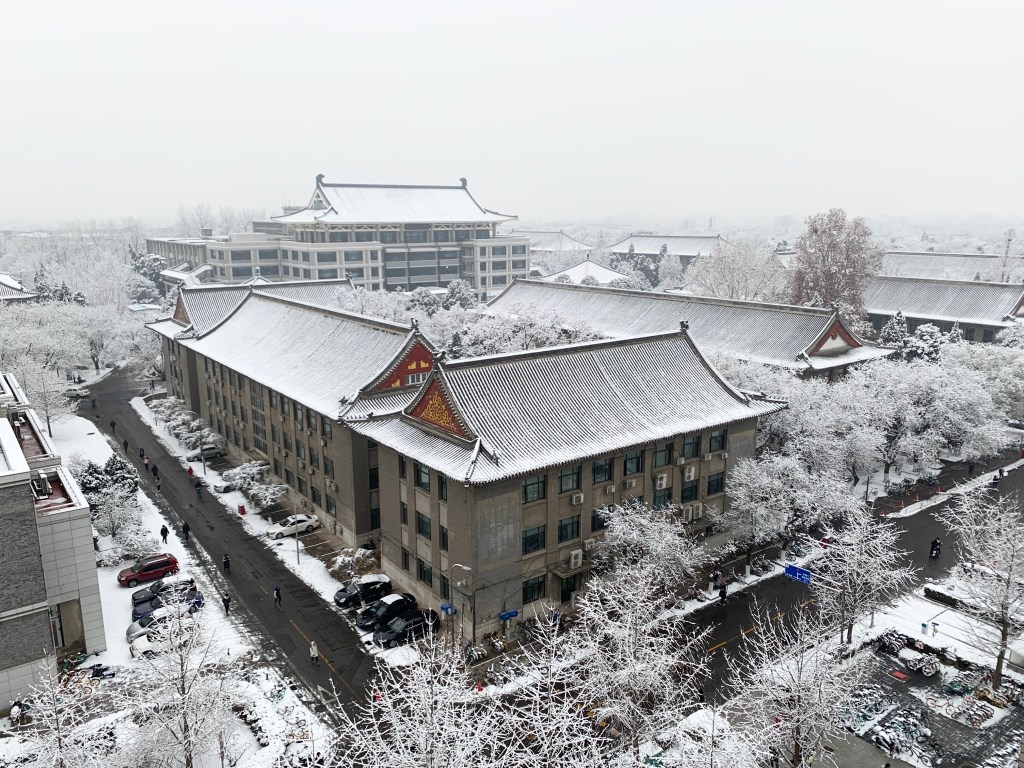
The first snow around the lab in 2021. Credit: Fan Zhou

Several trainees including PhD students, postdocs and technicians, have already been working in the lab for the past few months. I was so excited by their joining. Meanwhile, the way these guys met me for project discussion soon reminded me that I may be should list some suggestions about how to talk with your advisors. 


1. Do it regularly, e.g. once or twice a week, especially in the first year. This could be very helpful to make you form a manner to push yourself to do more, reading more and think more.

2. Always prepare your specific topic(s) you may wanna talk with her/him before the meeting. You will learn more if could try to follow this logic during the meeting: a. What I have done (experiments) during the past days; b. I think the results could indicate a conclusion (support the original hypothesis or not); c. Based on the current results, I plan to do XXX or YYY. Would you agree? Or which plan we should try first?

3. Try to talk about or report the new progress with your advisor actively before she/he ask for it. Otherwise you could see the advisor as a very aggressive one. Naturally you may often do things with high pressure during the following years. The original aim of your work is getting knowledge and learning problem solving, but not satisfying anyone include your advisor or your parents.

4. Keep your thinking independent. You could even argue with or try to convince her/him with new results, previous publications or knowledge, upon the transient disagreement between you two about the next plan.

5. Record the important or valuable suggestions or questions raised in the meeting with a pen, but not by your mind.

6. Ensure all the unsolved issues get feedback/renewal in the next discussion!

7. Never be afraid or shy to communicate with the advisors. Try to think the advisor could be just a teammate. Union with her/him could undoubtedly promote your scientific exploration!

Again, what I did, what I think and what I plan. 

Hope it helps.
Ready for a postdoc application?

The COVID-19 epidemic has been getting better in BJ. Over the past weeks, I have been meeting postdoc candidates both online and in person. So far, here are some thoughts about what I generally care about. Hope this could be helpful to some extent,

  1. Both the Chinese and English cover letters are okay with me, while it could be a opportunity to show your English writing.
  2. Whether you seriously think about your own research interests and why you are interested in us.
  3. Concluding your self-assessment upon your previous scientific training.
  4. Describing the future vision of your academic pursuits.
  5. A attractive publication list would be helpful while this is not the only bar for our consideration.

In the session of former interview, we probably would involve a 45min PPT presentation, a 15min discussion about your previous work and a general future plan with us. This part could be a great opportunity to show your technical expertises, independent and logical thinking and raise your possible questions about us.

Enlighten us why your expertises will improve the research in our lab if you could. This could be a major point.

Enjoy the job hunting journey since this could so valuable for stopping by for a moment, thinking about other research fields, search your deep mind and set a custom-made career plan of your own.

Stay safe and good luck!

The first lecture qualification

Just finished my first lecture qualification, entitled ‘Cell fate and single-cell analysis’, in COVID-19 epidemic area with Zoom. I got some suggestions from the kind and senior teachers, the inspection officers at THU. I wrote them down to make some memories and remind myself all the time. Due to the isolation and the block with the COVID-19, I used the slide-show instead of any possible formats even though I really would like to challenge some chalk class in the first place.

  1. I would rather apply the science images and videos instead of large range of words in the slides. This could be nice and vivid for the audience and students except one situation, the specific biological conceptions, e.g. the Developmental Biology, Cell Fate, Single-cell Omics, et al. Besides, you’d better label the critical words both in English and Chinese.
  2. Personally, I prefer a dark (mostly black) background in my slides since I think this could be helpful for attracting the audiences’ attention since years ago. Generally, this means that I have to take extra time to transit a lot of original images from publications into the dark background pages by Photoshop, enabling that they will match the main color of my slides, black. Unfortunately, I didn’t do it for all the images somehow because I didn’t spend enough time to ensure these details. And I was pointed out about half dark and half light in my slides, causing kinda of visual dissonance, which is not good thing for the audience. So I’m gonna correct it next time.
  3. Manage the rhythm of my speaking. Like some other new guys, I sometimes talk too fast. One way is that I did use a timer along my talk. And a useful suggestion is that I could ask some short questions to the audience and wait several seconds or even minutes, ensuring that they really digest and understand what I have talked before.

Can’t wait for more practice and hope that I will make some progress.

Do we need a postdoc(abroad) training?

Occasionally I was asked by trainees, ‘Does the abroad postdoc training or even a postdoc training have to be included in the CV when you apply a PI position in China?’ As a junior researcher growing up in homeland China, I actually experienced something during the past few months. I’ve been talking about this with junior or senior PIs. Here are my perspectives so far and I hope it will help.

  1. I actually applied for independent PI positions from three institutions in Beijing, and I have never felt left out during the application and interview issues. Some of the senior researchers even encouraged me much since they really hope the junior but with academic potential scholars, who grow up in homeland, could emerge and contribute to scientific communities in China as they said.
  2. It could be not surprising that the local trainees also have the opportunity to lead a team in top institutes like the ones from outside. That is because, we do have a incredible environment to receive a high-quality training in homeland: huge financial supports from the government, and of course the mentorship from our solid supervisor (mostly they got outside training background, decided to come back homeland to start their own independent careers and become your supervisors). Then trust your nation, mentors and yourself.
  3. A postdoc training must be needed? Generally yes if your aim is the positions in top institutions. Nowadays you consider to become a PI without any postdoc training probably because you have already published a so-called high-impact papers. Let’s leave ‘the occasionally you are selected to do some important project the mentor make you do’ alone first. However, the first papers should not be your signatures but the comprehensive quality in independent thinking, problem solving and academic scope, etc. People usually confuse the two yet a senior faculty-searching committee doesn’t. There are always exceptions, such as Feng Shao from NIBS, one of my academic idols. He actually did not want a postdoc training in Harvard since he already have so much abilities and views in science then. You should carry no doubts about it as long as you talk with him. This indicates either you firmly believe yourself like Feng Shao did or consider a mature postdoc training for the long run. It is true that the faculty search committee will use much more cautious than you can imagine if you lack that experience.
  4. You may say, ‘How do you know that I couldn’t work it out like Feng Shao, or even better than he did?’ Well, we never know. Therefore, on the other hand and needless to say, if you got the specific biomedical questions you are desperately eager to understand by yourself, and calmly believe that your expertise will largely meet your long-term research assumptions beyond PhD, then why not try to go for leading a team directly (become a PI)? The exceptions do happen around.
  5. These are some additional suggestions. You always consider the career plan by a lot of reasons. If you wanna a balance between your career plan and families. Keep it that way. You never know which one will be more important. Just follow your heart and make a decision. I’ve heard a PhD student said, ‘I just try my best in the research. If I can not make it finally, I will transit into other fields like a salesman and I will be an outstanding salesman’. ‘Keep looking, don’t settle.’ -by Steve Jobs.
  6. If I could go over again and the family issues didn’t show up when I got my PhD, I probably will choose to go outside like ideally Boston for a further training. That is because my personality always guides me to explore something new. This is from the button of my heart. It is so true that the wertern world still majorly take the lead of life science, especailly the original researches, meaning there are more opportunities for traning outside. Meanwhile, I’m also so glad I chose to stay in homeland and join the following amazing team, initiated an brand new direction and balance my families simultaneously. Such an unbelievable and joyful journey!
  7. Try something (directionally or/and technologically ) different when you are considering a postdoc plan. Never limit yourself in the warm but narrow circumstances. Be pure to search your own beloved things, definitely not the valuable things in others’ eyes. This will largely help you find a better and true self.
  8. Never think about a postdoc plan just because you are not ready for others. Use cautious about a postdoc plan if you are not that eager for a long-term academic career. Every node between two periods could be a gold opportunity to make some change or correction. Be courageous and do not waste it.

What the sharp interview-questions inspired me most was a single line: What is your signature and uniqueness?

Try to think about it often and it will help.

The descriptive discoveries by single-cell omics bring less useful knowledge?

The other day I was initiating the Charles Darwin’s On the Origin of Species by Means of Natural Selection, or the Preservation of Favoured Races in the Struggle for Life (物种起源) based on my supervisor Fuchou Tang’s recommendation. A absolute must read although the conclusions from it seems obvious and true in modern knowledge. You will be shocked by the views in the book only base on the large number observations of species, geography oversea. His logic was so clear that he could make absolutely definitive conclusions without any genetic knowledge at that early stages.

It means, a systematic and acurate description absolutely can provide prospective and new knowledge.

During my PhD at Bing Liu’s lab, I focused on the hematopoietic stem cell (HSC) formation during mammalian embryogenesis.

  1. We firstly explored a new marker to enrich the so rare functional HSCs (10-20 cells per embryo) by the unique single-cell initiated in vivo transplant system.
  2. We combined the single-cell transcriptome profiling to uncover the gene expression patterns. The endothelial-to-HSC transition(EC-HSC transition) enriched multiple signaling pathway.
  3. We hypothesis the mTOR could potentially regulate the HSC emergence.
  4. We specifically inhibited the mTOR in the endothelial cells before the HSC formation, resulting in a deletion of HSC emergence.

This looped study strongly indicates the single-cell gene expression patterns (so-called descriptive sequencing-based results) largely helped us mine so much critical potential candidate regulators during this EC-HSC transition. This story and my experience told us these resources could powerful to uncover the principles of many biological process if it is based on,

a. Whether we provided a higher-sensitivity/precision or untouched-yield database by a newly-developed wet/dry strategies, compared with the previous studies.
b. Whether we launched inspiring hypothesis based on the data mining (otherwise it maybe just visualize the well-known conclusions in an omics ways).
c. Whether we initiate the study with specific questions.
d. Whether we link the omics-based conclusion with the phenotype by following functional validations.

The single-cell biology indeed presents a unprecedented opportunity to explore the cell heterogeneity (accurate molecular landscape of the specific cell types) from the multidimensional molecular patterns at a so-far limiting resolution. The deep meaning could be that we can harvest a clear molecule activity map with THE TARGET CELL, which will never been read out with the measurement from bulk cells since it always only contains a AVERAGE level within the mixture of target and untarget cells. Taking the HSC emergence for example, we would never know any new clues from a bulk profiling of the whole AGM tissue (the core site of HSC derivation) or even CD31+CD45+/- cells (containing just one functional HSC from the other fifty cells) of the embryo at the very beginning of our study.

Taking the training from both the conventional developmental biology and single-cell biology together: Besides technically, the higher throughout, more accurate, more applicable in other fields (e.g. industry and clinical diagnosis), simultaneously more multi-dimensional omics methods at single-cell level and less costly, I assumed there will be no widespread question that the near future is absolutely the world of data mining and molecular feature-phenotype linking (a must read from J. Gray Camp et al.). I’m recently thinking about this by myself (you probably heard a lot from others),

  1. Measure/describe the scientific phenomenon/principle.
  2. Explore/understand the deep mechanism behind the principle.
  3. Manipulate the principle to promote the public health and nature.

These probably could be the three major steps and outcomes of life science. Are you enjoyable with your current queue?